Redesigning knowledge cards for 1B+ monthly searches
2023 · · Senior Experience Designer
CONTEXT
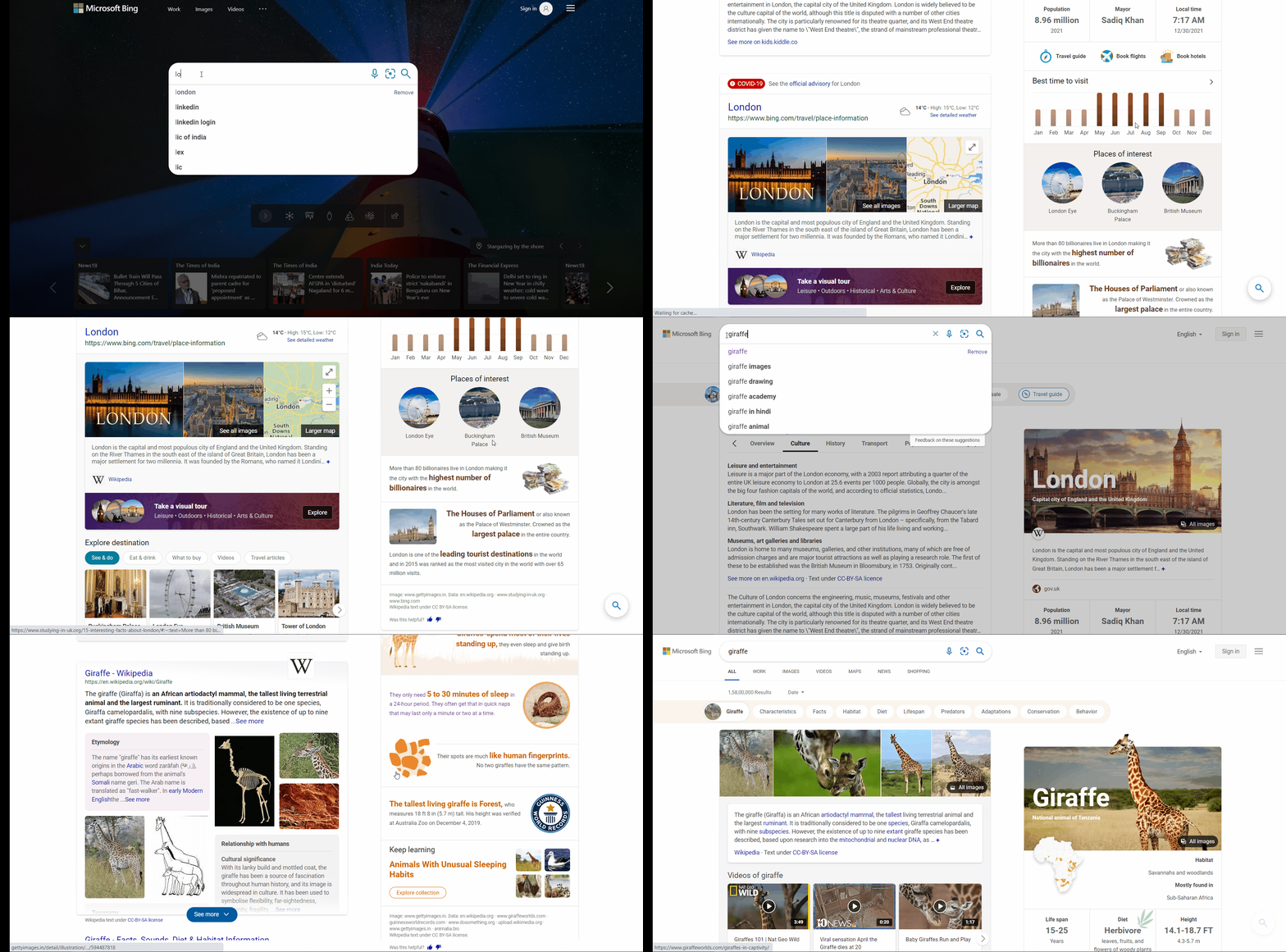
Bing surfaces knowledge cards when users search high-volume keywords — London, Michael Jackson, giraffe. These cards are the first thing hundreds of millions of users see. As part of a cross-functional team, I led the visual redesign of the knowledge card system.
PROBLEM
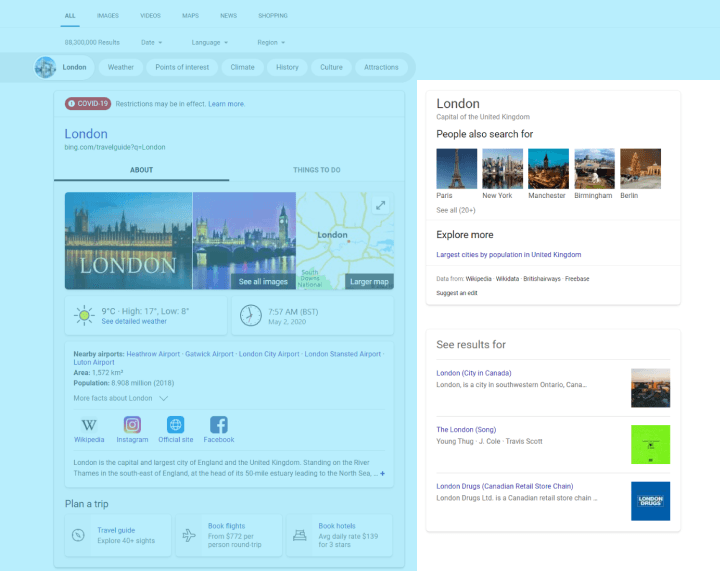
The existing knowledge cards were text-heavy and visually flat — a legacy format that hadn't kept pace with how users consume information. Key data like population, timelines, or species classification was buried in prose rather than presented in a scannable, visual format.
APPROACH
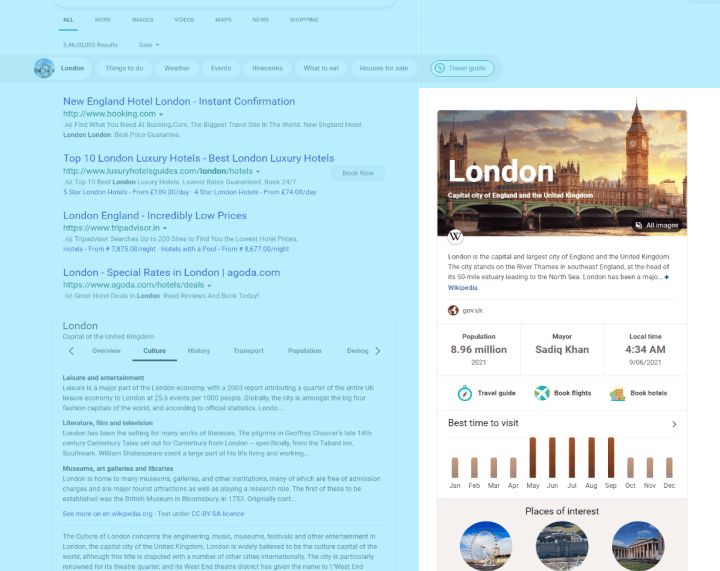
I redesigned the card system around information hierarchy — leading with a high-quality image, followed by a structured infographic layer that surfaces the most relevant data points for that entity type. A city card surfaces population and timezone. A person card surfaces key dates and roles. A species card surfaces taxonomy and habitat.
Each card type was designed as a template with defined slots, so the system could scale across thousands of entity categories without custom design per card. I worked closely with engineers to define the data schema that would power each slot.
OUTCOME
The redesigned knowledge cards shipped globally across Bing's search surface. The infographic format reduced time-to-answer for high-intent queries and improved visual consistency across entity types.
REFLECTION
The hardest constraint was data availability — not every entity had the same richness of structured data. Earlier alignment with the data engineering team on which slots could be reliably populated would have reduced edge case handling in the final designs.
More on this work is confidential.
Please email me if you'd like to chat!
KEY OUTCOMES